

Blank Page Blues
The Road to Published: Sharing discoveries, mistakes, and insights as a new author wends from the blank page to a published book in hand

“Okay, I write overblown, purple, self-indulgent prose. So fucking what?”
- Angela Carter
Courtesy of Lincoln Michel’s Counter Craft
“Angela Carter and the ‘So Fucking What?’ Approach to Writing”
![By [1], Fair use, https://en.wikipedia.org/w/index.php?curid=31712584](https://substackcdn.com/image/fetch/$s_!KQG4!,f_auto,q_auto:good,fl_progressive:steep/https%3A%2F%2Fsubstack-post-media.s3.amazonaws.com%2Fpublic%2Fimages%2F1cfa95c0-c279-4e0a-aae5-a83556a27dcc_300x200.jpeg "By [1], Fair use, https://en.wikipedia.org/w/index.php?curid=31712584")
My notebook is made for nobody’s eyes but my own. It’s a completely private space, and I protect that viciously. I will never show anything directly from its pages, and I certainly don’t let anyone have a flick through. This is important, because it gives me the freedom to write anything in it. That might be my darkest thoughts or my fragile feelings; but mostly it’s just terrible writing. I’m allowed to be incoherent, self-pitying, tacky, boring or stupid in this space. It’s nobody else’s business.
This absolute assertion of privacy is fundamental. If you do nothing else, do that.
- Courtesy of The Clearing by Katherine May’s “How to keep a writer’s notebook”
This is for anyone sitting down with their first notebook, journal, or Google doc.
Imagine you’ve somehow closed the door on the world, the kids, the dog, the dishes, the laundry. You’ve got your favorite cuppa, headphones on, and a scented candle for luck. You’re in a comfy chair, you’ve got your best Bic pen, and crack—there’s that new journal opening its empty, gaping maw in front of you. Oh Ford.
Welcome to the Blank Page Blues.
Yes, yes, I know, many of you have been writing for years—millions of words, reams of paper, terabytes of Word docs, you rock ’n’ writer you!—but let’s just pretend you’ve never written a word before.
New novel, new short story, new journal—new home, new baby, new job’s killing you, and you haven’t written in forever—whatever the circumstances and wherever you are on your writing journey, you have looked at a blank page and your mind has gone to ZERO. Nothing. Zippo. Writing who?
In fact, why write at all? Because this is certainly something I’ve said to myself, facing a blank page. What’s the point? Most people don’t even read a book a year.
Why read words off a piece of paper or a tablet when you can watch your stories in movies and on TV (a much more dynamic medium, Shirley) with the actual people and the special effects, and the music! Try to recreate the effect of music on a movie scene, but in a novel or short story. Impossible! The world is moving on from books—who needs ’em?
And yet, let us remember:
Every movie, every TV show, every play, poetry slam, song, speech, or essay starts out as words on a blank page.
Everyone has faced the blank page at some point. I’m sure we could name it something fearsome—Kali, Cruella, or Satan. But maybe we go another way?
What about Mother? Because for every racing heart and churning stomach sitting in front of her, she is also the source of every beautiful thing that’s ever been written down, from love letters to prize-winning novels, from celebrated films to slim books of heartbreaking poetry.
From that most miraculous and universal blank page literally everything is born.
![Proof : Book Cover for Paperback When God Was a Woman [KA0014_b01_f03_01]](https://substackcdn.com/image/fetch/$s_!UL1W!,f_auto,q_auto:good,fl_progressive:steep/https%3A%2F%2Fsubstack-post-media.s3.amazonaws.com%2Fpublic%2Fimages%2Fdffe172f-7a8d-48a4-b2de-c34de7f4bc79_700x505.jpeg "Proof : Book Cover for Paperback When God Was a Woman [KA0014_b01_f03_01]")
More in this edition:
→ The Chorus of No
→ “Laying track” with Julia Cameron
→ The Artist’s Other Way
Want to catch every edition of “The Road to Published”…?
There is something very alluring indeed about NOT making a mark on that blank page until you have that perfect idea. While you are still fiddling around, sighing and tinkering with your cushion, your phone, and your cuticle, you’ll never need to reckon with the chorus of NO that every author and artist must.
Deep down, maybe we don’t believe the process of writing itself is a worthy endeavor. We are taught from a young age that only the product, only the result, is valuable, usually through the reward of money or fame.
Are you rich? Are you famous? Then obviously you’re a crap writer, as laughable as an actor/waiter—or worse, a teacher!—because those who can do, and those who can’t, etc., etc.
So what’s the real problem here?
The problem is focusing on the “goal” of becoming a successful, bestselling writer.
The goal appears to you as the shining destination, those pearly gates emblazoned with “Welcome Published Author.”
What’s that advice coaches are always giving? Imagine yourself in five years… Well. It’s easy to imagine typing The End with a great flourish, dashing off a query to an agent (one or two—you’re brilliant, you got this!) and landing a six-figure book deal that propels you to stardom, guest spots on TODAY, maybe a movie or TV deal.
What’s not so easy is hearing “No” that first, or that 60th, or 600th time you submit a short story, poem, query, or pitch.

💡The lives of famous authors seem oddly Bizarro World, as though the art invents the artist, rather than the other way around.
Writers spring fully formed from the pages of our books. We are invisible until our work somehow achieves escape velocity, but should lightning strike and it happens to you, doors (we imagine) will magically fall open at our approach, no knocking necessary.
Getting in the door is pretty much the entire game.
- Fran Lebowitz
It’s like imposter syndrome, but in a strange reversal: we read the biography of a famous artist in all their nose-picking glory, and imagine their every fart captures the music of the cosmos. Maybe it’s time to stop lionizing the idea of the Artist—and paying attention to the work instead of the size of the checks.💡
Start with a journal, and everything else follows
“[P]eople are always telling me how afraid they are to keep a journal, because they would be so ashamed if someone found it and read it and their deepest secrets were revealed—but I suggested it might also be liberating, relieving the immense pressure of it, maybe completely dissolving that sense of shame … Most often, shame does more harm than good.”
- from The Isolation Journals with Suleika Jaouad
But we’re getting ahead of ourselves, because actually we haven’t written a word yet. We’ve already heard that chorus of NO! from our family, who hope we’ll become dentists; or friends, who remember when we got drunk and puked in the cupholder of their Honda (“You!? A writer? It is to laugh!”) or teachers, who with red pens made clear in no uncertain terms that we are not the Chosen One of Literature. Without the kiss of Genius and the blessing of Fortune, we are doomed.
But here’s the truth.
For sure, becoming a writer is not for the faint of heart. The road will be hard, and we might never make a bestseller list, but nothing is impossible, and writing can be one of the greatest adventures we ever embark on.
Not going to lie, if you’ve never written a word there’s a pretty long journey ahead. If you’re hovering somewhere around me write pretty one day, you probably have many years of trying, and failing, and trying again, and failing better. (Thank you, Samuel Beckett.)
“[T]he magic of journaling is that it allows you to DM with your soul, to hear the semi-secret messages stewing within you that you might not otherwise hear unless you paused, paid attention, and took note … And now, as the world has become more and more chaotic … journaling is a physically safe place just for me. It’s an almost free, quick, self-soothing ritual that builds reliability in an unreliable world ... A place where you can’t be judged and that is 100% only for your benefit.”
- Tara Schuster of A Little Thing That Helps, “Journal Prompts”
The wonderful thing about the process of writing—even when you don’t want to, even when you feel blah, or feh, or ugh—is that the simple act of it takes you someplace you were not when you started. You are quite literally transported to new thoughts, new places, new awarenesses that you did not have access to before.
That is the true power of writing. It is transformative.
It may take you years. It may take you thirty-four years—as it took me—to stop building bridges to nowhere and finally arrive at a destination, but I promise you that when you arrive, you will be so grateful, so thrilled, and so proud of your progress that you won’t regret the fact that you were walking in circles as long as you were, you’ll just be glad that you kept putting one foot in front of the other.
One day, you will get the crazy idea to take that left turn at Albuquerque, instead of the right, and you will be amazed.
“The journal is oceanic. It is capacious. It is memory, reverie, distillation. It teaches us to pay attention, to examine, to reflect, to play. The journal is tabula rasa and terra incognita. It is a mirror for the self—past, present, and future—and a portal onto the not yet known. It is refuge: a hiding place, a finding place.”
— Courtesy of The Isolation Journals with Suleika Jaouad
Julia Cameron, creator of The Artist’s Way Industries™ (I joke,) calls this long and thankless process of creating a writing practice “laying track.” It is basically doing the heavy lifting of writing by—hold on to your hat—writing!
You can’t cross a continent—you can’t join the gold rush out West for the privilege of shoveling enough dirt to find a few nuggets—until you’ve laid down the track for the railroad that’s going to haul your hopeful ass across the country. There’s no way around it. You’ve got to write, and write, and write some more.
Imagine a Zen master standing in front of you. To every objection why you can’t make that mark on the page, they scream, “Write!” and slap you.
But my writing is ghastly. (“Write.” *slap*)
But I’m so self-conscious. (“Write!” *Slap*)
But everything I write is so wooden, so limp, so barf. (“WRITE! WRITE! WRITE!” *SLAP* *SLAP* *SLAP*)
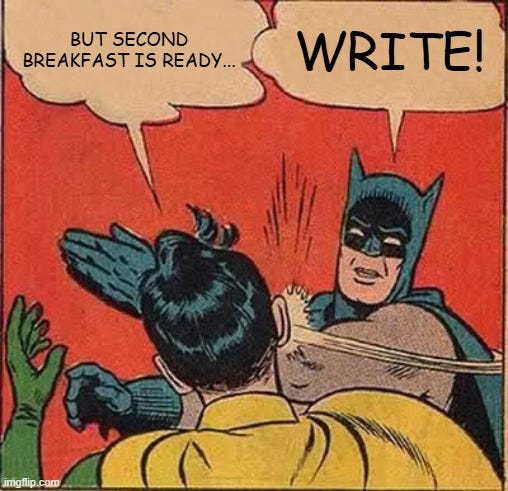
You can’t think about the act of writing; your hopes for your writing; your dreams of writing; or long stretches of blissful quiet in romantic, book-lined studies looking writerly: You must write, ANYTHING. Literally anything.
You must take that first step, make that first mark. Got an inspiring quote? Write it at the top of that blank page, and then just keep going, whatever is in your head. Say “Head, give me a word!” and write whatever word comes to mind. Do that over and over and over.
There. You’re writing. Once you get started, writing builds its own momentum until you are pretty much dragged along for the ride.
Forget about becoming a writer. It’s not your job to be a writer. It’s your job to write. Let’s get to it!
I’m so glad you are here, and I invite you to Comment and join the Chat to discuss these ideas, and share any reflections, answers to the writing prompts below, or questions you may have.
ALSO and ESPECIALLY: If you have any ideas, thoughts, resources, links, book recs that will be helpful to someone else’s Comment, please do share!
Thank you! ~ MTF
WRITING PROMPTS
The Art of Writing Without Permission – Angela Carter unapologetically embraced her own voice, no matter how “overblown, purple, or self-indulgent” it may have been. Write about the idea of writing with reckless abandon, without fear of judgment or rejection. How does it feel to write solely for yourself?
Facing the Blank Page – The blank page can be both a fearsome adversary and the birthplace of all creation. Write a reflection from the perspective of a writer staring at an intimidating blank page. Does the page mock them? Encourage them? Transform into something unexpected? Does the page talk back?
The Myth of the “Real” Writer – Myth: You aren’t a real writer until you achieve fame or success. Write about an artist or writer who struggles with imposter syndrome, convinced they are not truly an artist until they are validated by external success. What event, revelation, or realization changes their perspective?
FURTHER READING
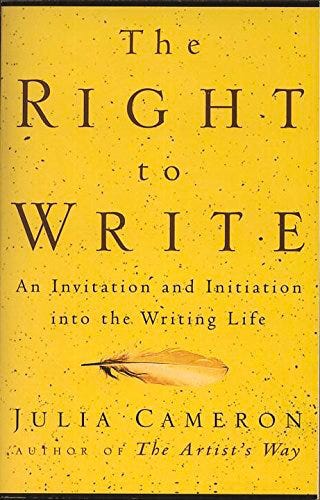
Say what you will about Julia Cameron, she has inspired millions of people with her book The Artist’s Way. Even if, like me, you’ve given the dreaded Morning Pages a whirl and found it taking over your life, she has interesting things to say about getting out of your own way and making “the page” the place where your writing life pretty much begins and ends.
This auxiliary book, The Right to Write, has a lot of the same wisdom, but in a more digestible, less structured form, with writing prompts galore. Give it a try, at your own pace.
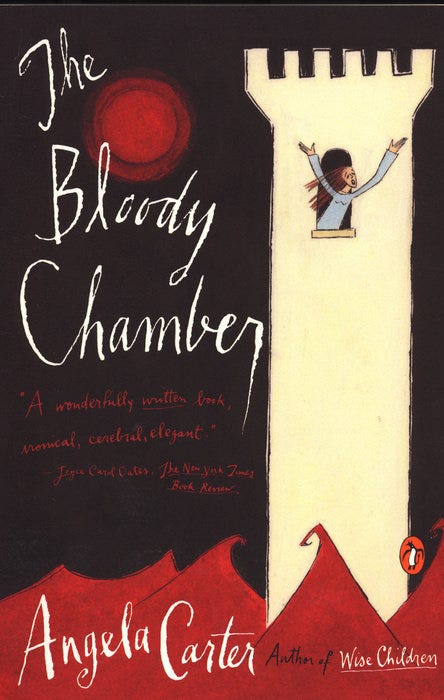
As referenced by Lincoln Michel in the quote at the top: “…a unique and thrilling read … described as book of feminist fairy tale retellings.”
RESOURCES
…Speaking of fairy tales…
→ Saturday, April 12, 11am-2pm EST: Richard Mirabella, author of the heartbreaking novel, Brother & Sister Enter the Forest, is teaching a one-session class -What We Found in the Forest: Using Fairy Tales to Generate Fiction. If you loved his Lambda Literary Award-nominated book, you’ll love this 1-session deep dive into how “fairy tales can be sources of plot, symbols, and narrative shapes.”

→ Pride & Pages Book Club - “Pride & Pages Book Club is the only email newsletter that focuses exclusively on LGBTQIA+ books, because queer can’t be put in one box. Our selection of new releases, hot deals, and more are carefully vetted to ensure your reading experience is filled with quality books that are created without the use of generative AI.”


Relevant to something I saw today - Brandon Sanderson giving an interview about how he writes 2000-2500 words a day. In the comments, someone said they would never do a target word count because they were interested in quality over quantity. They missed the point! Writing as a habit allows quality. Writing as a habit gives you the opportunity to develop your quality faster. And not all 2500 of those words have to be good quality, because not all of them will remain in the final book!
Fascinating. Angela Carter is a wonderful writer. A perfect but impossible guide. Maybe the best kind...